

Cart 0
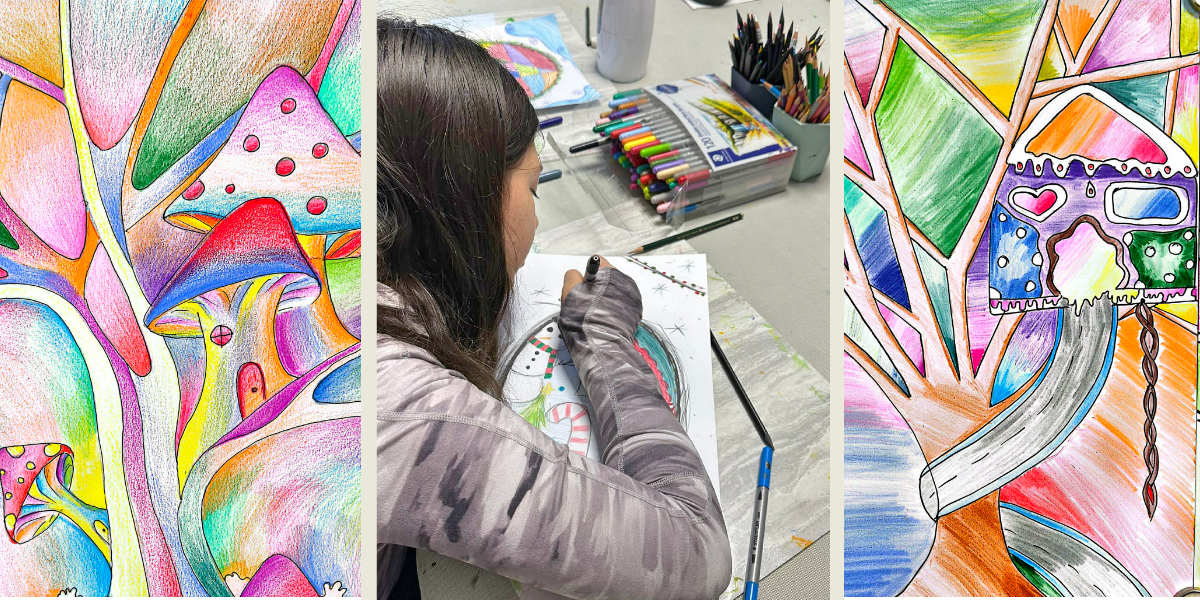

What does the child want from us when he shares his creation with us? There is an extremely fragile and, at the same time, profound moment when a child comes to us with a drawing, a construction, a story or any other form of creation, willing to share his art. It’s not just a colored sheet or a “cute” object. It’s an invitation. A sincere openness to his inner world, exactly as it is in that precious moment of childhood.
When a child shares his creation, he shows us his vision of life. Not one filtered, corrected or adapted to external expectations, but a pure, authentic one, born from his emotions, experiences and imagination. It is an emotional photograph of his inner present.
The child does not seek perfection
An essential thing that is important to understand is that the little one is not looking for perfection. The idea of “perfect” does not naturally belong to him. It appears later, brought from the outside, by adults, by comparisons and standards impossible to achieve. The child creates because he feels, because he explores, because he enjoys the process. For him, the experience matters more than the result.
When we intervene with “it’s not really like that“, “look how it looks in reality” or “try again“, the subtle message conveyed is that what he offered is not enough. And for a child, this can be painful.
What is the child really looking for?
When he comes to us with his creation, the child seeks:
· Support – an adult who sees and accepts him.
· A safe place – an emotional space where they can unfold without fear of judgment.
· Connection – he wants to show his inner universe to the people he cares about the most.
· Emotional safety – confirmation that it is okay to be exactly as it is.
· Assurance – the need to feel that the parent or adult of reference is proud of him.
For the child, creation is a language. And we are invited to listen to him.
What can we do at that moment?
Our reaction matters enormously. Much more than the final result of the drawing or creation. We can:
· congratulate him sincerely;
· to thank him for choosing to share his ideas with us;
· ask him what the story behind the drawing is;
· to show him real interest and curiosity;
· to encourage him to continue, to create, to follow his passion;
· let us praise him for his initiative and courage to create.
These simple gestures build self-confidence and the joy of expressing oneself freely over time.
Why criticism and “correction” are not appropriate
Correcting or criticizing a child’s drawing is a fundamentally inappropriate act. Children are an endless source of imagination and purity. Everything that comes out of their hand is magical, because it comes from a sincere place. Comparing their creation to reality or adult standards can deeply hurt and close doors that were barely opening.
The child’s art does not need to be “correct”. She needs to be seen.
We create together, without pressure
It is wonderful to draw together with the children, to show them how we draw, to give them examples. But without the pressure to repeat or imitate. Without turning play into a lesson. The child has his own rhythm, his own language and his own vision. For him, the support of his parents matters a lot.
Art as an experience, not as a result
Art is essentially about sincerity and courage. It is a journey, a living experience. And no matter how “grandiose” the end result is, every step is worth living and celebrating.
The child does not need evaluation, correction or comparison. It needs to be seen, heard, and accepted. He needs to feel that his inner world matters and that it is enough exactly as it is. When we offer support, sincere interest and joy in the creative process, we lay solid bricks on the foundation of self-esteem, courage and freedom of expression.
Let us remember, then, that the art of the child is not about performance, but about relationship. About the connection between him and us. And the most beautiful validation we can give it is our warm, attentive and non-judgmental presence.
The creative workshops organized by InArtArena Studio are designed specifically for children, they aim to develop visual expressiveness, imagination and fine motor skills through artistic activities such as drawing, painting, collage, modeling or combinations of these. Our courses are warm, friendly and limited to small groups for personalized attention. If you want your child to be in a place where he is truly seen, supported and encouraged, reserve a place for him at a demonstration workshop within the Art in Motion: Classical Themes, New Visions.